Zero Trust Security Implementation: Complete Guide for 2025

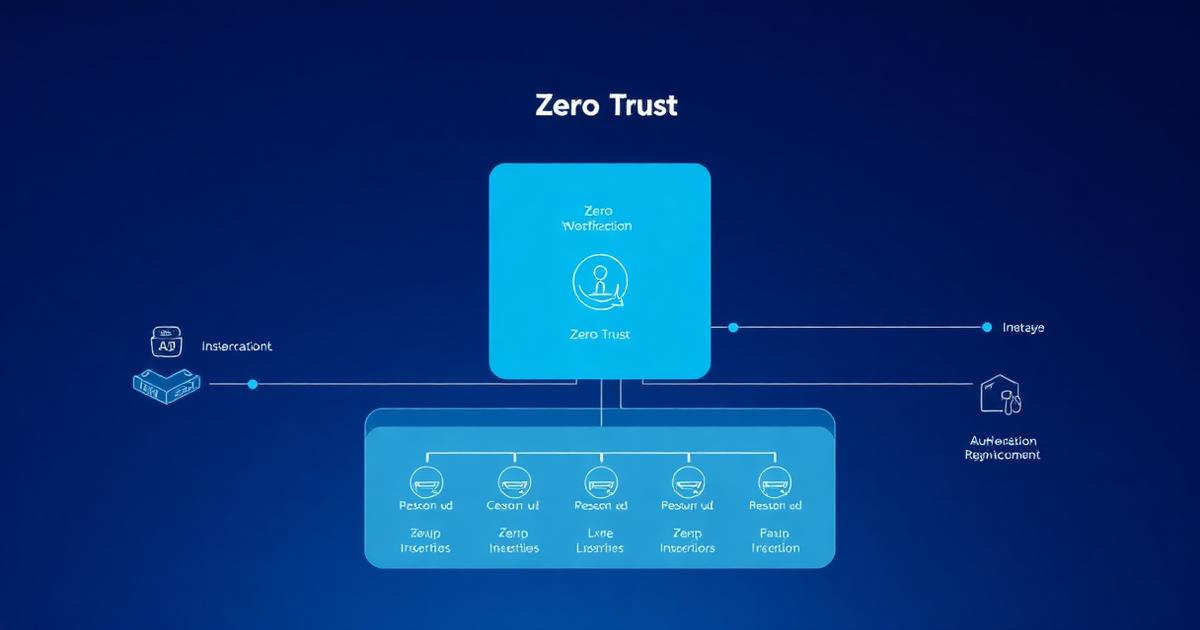
The security perimeter as we knew it no longer exists. With remote work, cloud adoption, and mobile access becoming standard, organizations can no longer rely on castle-and-moat security models. Zero Trust has emerged as the essential framework for modern cybersecurity, operating on a simple principle: never trust, always verify. According to recent studies, organizations implementing Zero Trust architecture experience 50% fewer security incidents and reduce breach costs by an average of $1.76 million. Zero Trust isn't just a buzzword—it's a fundamental shift in how we approach security. Instead of assuming everything inside your network is safe, Zero Trust requires continuous verification of every user, device, and application attempting to access resources, regardless of location. This comprehensive guide walks you through implementing Zero Trust security in 2025, covering identity verification, micro-segmentation, least privilege access, continuous monitoring, and practical implementation strategies. Whether you're starting from scratch or enhancing existing security, this guide provides the roadmap to build a robust Zero Trust architecture.
1. Understanding Zero Trust Principles
Zero Trust security is built on three core principles that fundamentally change how we approach cybersecurity. First, verify explicitly—always authenticate and authorize based on all available data points including user identity, location, device health, service or workload, data classification, and anomalies. Second, use least privilege access—limit user access with Just-In-Time and Just-Enough-Access (JIT/JEA), risk-based adaptive policies, and data protection to secure both data and productivity. Third, assume breach—minimize blast radius for breaches and prevent lateral movement by segmenting access by network, user, devices, and application awareness. These principles work together to create a security model where trust is never assumed and must be continuously earned and verified. Unlike traditional security that focuses on perimeter defense, Zero Trust assumes threats exist both inside and outside the network. This means every access request is treated as if it originates from an untrusted network, requiring full authentication, authorization, and encryption. Organizations that embrace these principles see dramatic reductions in security incidents, faster threat detection, and improved compliance posture. The shift requires cultural change as much as technical implementation—security teams must move from implicit trust to explicit verification at every layer.
2. Identity and Access Management (IAM) as the Foundation
Identity is the new perimeter in Zero Trust architecture. Robust IAM implementation starts with multi-factor authentication (MFA) for all users, privileged and standard alike. Modern MFA goes beyond simple SMS codes—implement phishing-resistant authentication using FIDO2 security keys, biometrics, or certificate-based authentication. Single Sign-On (SSO) centralizes authentication while improving user experience and security visibility. Implement identity governance with regular access reviews, automated provisioning and deprovisioning, and role-based access controls (RBAC) aligned to business functions. Privileged Access Management (PAM) is critical—use just-in-time elevation, session recording for audit trails, and credential vaulting for sensitive accounts. Implement risk-based adaptive authentication that considers context like user location, device posture, access patterns, and threat intelligence. For example, a user accessing from a new location or device should face additional verification steps. Identity federation enables secure access across cloud services and partner organizations while maintaining centralized control. Modern IAM platforms like Okta, Azure AD, or Google Workspace provide the foundation, but success requires proper configuration, monitoring, and continuous refinement of access policies based on actual usage patterns and risk signals.
3. Network Micro-Segmentation and Access Control
Network segmentation is essential to Zero Trust—it limits lateral movement if attackers breach your perimeter. Traditional VLANs aren't enough; implement micro-segmentation that creates secure zones down to individual workload level. Software-defined perimeters (SDP) create one-to-one network connections between users and resources, making your network infrastructure invisible to unauthorized users. Implement network access control (NAC) that continuously validates device health and compliance before granting access. Use application-layer segmentation to control access based on application identity rather than IP addresses—this remains effective even as workloads move across cloud environments. For cloud environments, leverage native security groups, network policies, and service mesh architectures that provide granular traffic control. East-west traffic (between internal resources) should be encrypted and inspected, not just north-south traffic (entering and leaving your network). Implement zero trust network access (ZTNA) to replace legacy VPNs—ZTNA grants access to specific applications rather than entire networks, dramatically reducing attack surface. Regular network segmentation reviews ensure policies remain aligned with business needs and don't create security gaps. Tools like Palo Alto Networks Prisma, Zscaler, or Cloudflare Access enable scalable micro-segmentation across hybrid and multi-cloud environments.
4. Continuous Monitoring and Analytics
Zero Trust requires continuous validation—trust is never permanent but must be continuously earned. Implement Security Information and Event Management (SIEM) that aggregates logs from all systems, applications, and infrastructure. Modern SIEM platforms use machine learning to detect anomalous behavior that might indicate compromise. User and Entity Behavior Analytics (UEBA) establishes baselines for normal behavior and alerts on deviations—like a user accessing unusual data volumes or logging in from suspicious locations. Implement endpoint detection and response (EDR) on all devices to provide real-time visibility into endpoint activities and enable rapid threat response. Cloud security posture management (CSPM) continuously assesses cloud configurations against security best practices, identifying misconfigurations before they're exploited. Network traffic analysis provides visibility into all network communications, detecting lateral movement attempts and command-and-control traffic. Security orchestration, automation, and response (SOAR) automates incident response workflows, dramatically reducing mean time to respond (MTTR). Implement continuous authentication where trust is constantly re-evaluated based on behavior—if a user's behavior becomes suspicious mid-session, access can be automatically revoked or step-up authentication required. Leverage threat intelligence feeds to enrich monitoring with external data about known threats. Regular security metrics and reporting ensure leadership visibility into security posture and improvement over time.
5. Data Protection and Encryption
Protecting data is the ultimate goal of Zero Trust—implement defense in depth. Classify all data based on sensitivity and business impact, then apply protection controls proportional to classification. Encrypt data at rest using strong encryption standards (AES-256) with proper key management—never store encryption keys alongside encrypted data. Implement encryption in transit for all data movement using TLS 1.3 or higher, including internal network communications. Data loss prevention (DLP) tools monitor and control data movement, preventing sensitive information from leaving your control. Rights management ensures only authorized users can access, edit, or share specific documents, with controls that persist even after files leave your network. Implement tokenization or data masking for sensitive fields in non-production environments. Database activity monitoring tracks all database access and queries, alerting on suspicious patterns. Cloud data protection extends DLP and encryption to SaaS applications, cloud storage, and cloud databases. Regular data access audits identify who has access to sensitive data and whether that access is still necessary. Backup and disaster recovery are essential—encrypted backups stored in separate locations ensure data survivability even after catastrophic incidents. Remember: encryption is only effective with proper key management—implement hardware security modules (HSMs) or cloud key management services to protect encryption keys.
6. Endpoint and Device Security
Every endpoint is a potential entry point—secure them rigorously. Implement device trust assessments before granting network access—check for updated operating systems, active anti-malware, disk encryption, and compliance with security policies. Mobile device management (MDM) provides centralized control over smartphones and tablets, enabling remote wipe, application management, and policy enforcement. For BYOD environments, containerization separates personal and work data on devices. Deploy endpoint protection platforms (EPP) that combine antivirus, anti-malware, firewall, and intrusion prevention on every device. Automated patch management ensures all endpoints receive security updates promptly—unpatched systems are low-hanging fruit for attackers. Application whitelisting prevents unauthorized applications from executing, dramatically reducing malware effectiveness. Implement secure device onboarding processes that establish trust before devices access corporate resources. Regular device health checks ensure continued compliance—devices falling out of compliance should be automatically quarantined. For IoT devices, implement network segmentation and dedicated security policies given their often-limited security capabilities. Secure boot and firmware integrity verification prevent rootkits and bootkit attacks. Consider hardware-based security like TPM chips for cryptographic operations and secure key storage.
7. Application Security in Zero Trust
Applications are the interface to your data and must be secured comprehensively. Implement secure development lifecycle (SDLC) practices including security requirements, threat modeling, secure coding standards, and security testing. API security is critical—implement API gateways that provide authentication, authorization, rate limiting, and threat protection for all APIs. Web application firewalls (WAF) protect against OWASP Top 10 vulnerabilities, bot attacks, and application-layer DDoS. Regular penetration testing and vulnerability assessments identify weaknesses before attackers exploit them. Runtime application self-protection (RASP) monitors applications from within, detecting and blocking attacks in real-time. Software composition analysis identifies vulnerable components in third-party libraries and frameworks. Implement least privilege for application service accounts—applications should only access resources they absolutely need. Container security scans images for vulnerabilities and misconfigurations before deployment, with runtime protection monitoring container behavior. For microservices, service mesh architectures provide mutual TLS authentication between services, traffic encryption, and fine-grained access controls. Regular security code reviews catch vulnerabilities that automated tools miss. Implement secure secrets management—never hardcode credentials in application code, use dedicated vaults like HashiCorp Vault or cloud provider solutions.
8. Implementing Zero Trust Cloud Security
Cloud environments require adapted Zero Trust strategies. Start with cloud security posture management (CSPM) that continuously scans cloud configurations for security risks—exposed storage buckets, overly permissive IAM policies, missing encryption, or disabled logging. Implement cloud workload protection platforms (CWPP) that provide vulnerability management, runtime protection, and compliance scanning for cloud workloads. Use cloud-native network security groups and firewall rules to implement micro-segmentation. Cloud access security brokers (CASB) provide visibility and control for SaaS applications, enforcing DLP policies and detecting shadow IT. Serverless security is essential—implement runtime protection, dependency scanning, and least privilege IAM for Lambda functions and similar services. Multi-cloud environments add complexity—use cloud-native tools where possible but implement cross-cloud security platforms for unified visibility and policy enforcement. Infrastructure as code (IaC) scanning identifies security issues in Terraform, CloudFormation, or ARM templates before deployment. Implement cloud data encryption with customer-managed keys for sensitive data. Regular cloud security assessments identify misconfigurations and policy violations. Cloud identity management integrates with your corporate IAM, enforcing consistent authentication and authorization policies. Remember: shared responsibility model means you're responsible for security in the cloud even if cloud providers secure the cloud infrastructure itself.
9. Zero Trust Implementation Roadmap
Implementing Zero Trust is a journey, not a destination—approach it systematically. Phase 1 (Months 1-3): Assess current state through security audits, identify critical assets and data flows, and establish baseline security metrics. Implement MFA for all users and begin identity governance initiatives. Phase 2 (Months 4-6): Deploy endpoint protection and device trust assessments, implement network segmentation for critical assets, and establish SIEM and logging infrastructure. Begin cloud security posture management if you use cloud services. Phase 3 (Months 7-9): Implement micro-segmentation across the network, deploy ZTNA to replace VPNs, and establish continuous monitoring and analytics. Enhance application security with WAF and API security. Phase 4 (Months 10-12): Implement advanced data protection with DLP and encryption, deploy automated security orchestration, and establish security metrics and dashboards. Conduct third-party Zero Trust assessment. Ongoing: Continuous improvement through regular security assessments, policy refinement based on usage patterns and threat intelligence, security awareness training, and staying current with emerging threats. Remember: perfect is the enemy of good—start with high-value, high-risk areas and expand incrementally. Celebrate wins and learn from setbacks. Executive sponsorship is essential—Zero Trust affects the entire organization and requires resources, budget, and cultural change.
10. Measuring Zero Trust Success
You can't improve what you don't measure—establish clear Zero Trust metrics. Track mean time to detect (MTTD) threats—Zero Trust should reduce this through improved visibility and monitoring. Monitor mean time to respond (MTTR) to incidents—automation and orchestration should accelerate response. Measure access policy violations and exceptions—declining exceptions indicate improving policy maturity. Track authentication success rates and MFA adoption—should approach 100% for all users. Monitor security incident frequency and severity—should decrease as Zero Trust matures. Measure network segmentation coverage—percentage of critical assets behind micro-segmentation. Track device compliance rates—percentage of devices meeting security policies. Monitor data classification coverage—percentage of data that's been classified and protected. Measure encryption coverage for data at rest and in transit. Track security tool integration—unified security platforms improve effectiveness. Conduct regular user security awareness assessments—human error remains a leading cause of breaches. Benchmark against industry standards and frameworks like NIST Zero Trust Architecture. Regular executive reporting maintains visibility and support. Remember: metrics should drive action, not just report status—use insights to prioritize improvements and resource allocation. Mature Zero Trust implementations see measurable risk reduction, faster incident response, and improved compliance posture.
Conclusion
Zero Trust security represents a fundamental shift from perimeter-based security to identity-centric, continuous verification. While implementation requires significant effort and organizational commitment, the security benefits are substantial—reduced breach risk, faster threat detection, improved compliance, and better support for modern work patterns including remote access and cloud adoption. Start with clear assessment of your current security posture, prioritize high-risk areas, and implement Zero Trust incrementally. Focus on identity as your new perimeter, implement robust monitoring and analytics, segment your network granularly, and encrypt data comprehensively. Remember that Zero Trust is both a technical architecture and a security culture—success requires executive sponsorship, cross-functional collaboration, and ongoing commitment to security excellence. The threat landscape continues to evolve, but Zero Trust provides the flexible, adaptive security framework needed to protect organizations in 2025 and beyond. By never trusting and always verifying, organizations build resilient security that adapts to new threats, supports business agility, and protects what matters most—your data, your customers, and your reputation.
About the Author
Bleach Security Team is part of the Bleach Security team, specializing in cloud security, compliance, and helping businesses protect their digital assets.
Published on November 18, 2025